
The UK solar industry is entering a new phase — and the numbers tell the story.
The UK had 18 GW of installed solar capacity by the first quarter of 2025, while the Government’s Clean Power 2030 Action Plan is targeting 45–47 GW of solar capacity by 2030. In February 2026, the UK Government secured a record 4.9 GW of new solar projects through its latest renewable energy auction, while 2025 saw a record 269,000 new solar installations, 37% more than the previous year.
This rapid expansion is not only about building new solar farms. As the UK’s installed solar base grows, increasing attention is also being given to upgrading, replacing and repowering existing solar assets.
For solar farm owners and operators, repowering can provide an opportunity to replace older or less efficient equipment with newer, higher-performance technology — potentially increasing energy generation from an established site.
But there is another side to this process.
What happens to the solar panels that are removed during repowering?
A panel does not necessarily have to be completely at the end of its physical life before it is replaced. Panels may be removed because of degradation, technological improvements, changes to project economics or a wider upgrade of the solar farm.
This means that the UK’s growing solar expansion is also creating a growing need for responsible PV panel reuse, recycling and material recovery.
For the solar industry, repowering and recycling are therefore becoming increasingly connected.
What Is Solar Farm Repowering?
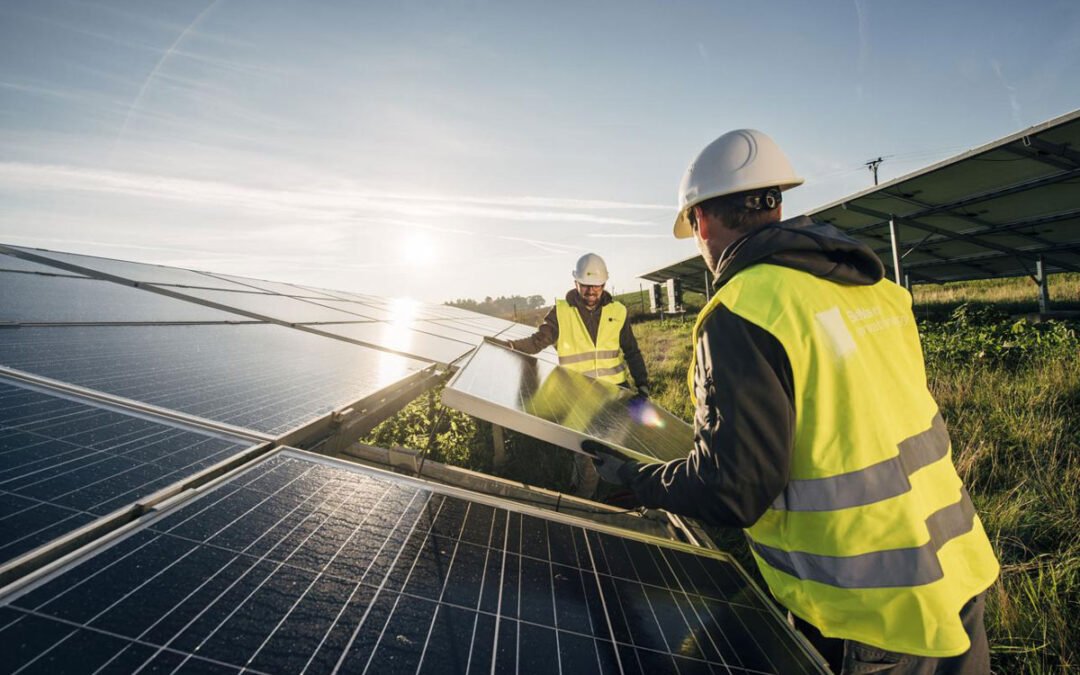
Solar farm repowering is the process of upgrading an existing solar installation by replacing some or all of its equipment with newer technology.
This may include replacing:
- Solar PV modules
- Inverters
- Electrical equipment
- Cabling and associated infrastructure
- Mounting or tracking systems
- Other components of the original solar installation
The objective is generally to improve the performance, reliability or energy output of an existing solar site.
Instead of abandoning an established site and developing an entirely new project elsewhere, repowering can allow operators to make better use of existing land, grid connections and infrastructure.
Why Are UK Solar Farms Being Repowered?
Solar technology has developed significantly over the last decade.
Modern PV modules can deliver considerably more power from a similar physical footprint than many older modules. As a result, replacing older panels can sometimes allow a solar farm to generate more electricity using the same site.
There are several reasons why a solar farm operator may consider repowering.
1. Higher-Efficiency Solar Panels
Newer PV technology can provide greater power output per panel and, in some cases, greater power density across the site.
Replacing older modules can therefore improve the productivity of an existing solar farm.
2. Panel Degradation
Solar panels gradually lose performance over time.
Although quality PV modules can continue producing electricity for decades, their output can decline during their operating life.
Repowering provides an opportunity to replace ageing equipment before declining performance becomes a significant commercial issue.
3. Improved Inverter Technology
Solar panels are only one part of a PV system.
Inverters, electrical infrastructure and monitoring technology also evolve. Modern equipment can provide improvements in efficiency, reliability, monitoring and system management.
4. Changing Project Economics
Energy prices, financing conditions, grid requirements and technology costs can all affect the economics of an existing solar farm.
A repowering project can provide an opportunity to reassess the entire installation and improve its long-term performance.
5. Making Better Use of Existing Sites
Developing a new solar farm can involve planning, grid connection, environmental assessment and significant infrastructure investment.
Repowering an existing site may allow an operator to make better use of infrastructure that is already in place.
Do Solar Panels Need to Reach End of Life Before They Are Replaced?
No.
This is one of the most important distinctions between traditional end-of-life solar panel recycling and solar farm repowering.
A panel does not necessarily have to be completely non-functional before it is removed.
A solar farm operator may replace working panels because newer technology offers better performance, because equipment no longer meets the requirements of the project, or because the economics of upgrading the site make commercial sense.
This means that solar panel recycling is not limited to panels that have simply stopped working.
Repowering can create a significant flow of removed PV modules that need to be assessed and managed appropriately.
What Happens to Solar Panels Removed During Repowering?
Once panels are removed from a solar farm, there are generally several possible routes.
Route 1: Reuse
Some panels may still have useful operating life remaining.
Where appropriate, modules can potentially be inspected, tested and considered for reuse.
However, reuse should not simply mean selling old panels without assessment.
Electrical safety, condition, performance, provenance, warranties and the availability of a suitable secondary market all need to be considered.
The UK WEEE framework also recognises testing and repair for reuse, with appropriate procedures required for equipment intended for reuse.
Route 2: Refurbishment
In some situations, equipment may be suitable for refurbishment before being returned to service.
This can be an option where the panels or components retain sufficient technical and commercial value.
However, refurbishment is not appropriate for every module.
Panels that are damaged, contaminated, defective or otherwise unsuitable should be directed towards an appropriate treatment and recycling route.
Route 3: Recycling
When panels are no longer suitable for reuse, recycling allows their constituent materials to be recovered.
A typical PV module can contain valuable materials such as:
- Glass
- Aluminium
- Silicon
- Copper
- Silver
- Other metals and components
The exact recovery process depends on the panel technology and treatment system.
The aim is to recover usable materials while managing any hazardous components appropriately.
Solar Panels Are WEEE in the UK
Photovoltaic panels are covered by the UK’s Waste Electrical and Electronic Equipment (WEEE) framework.
This is particularly important when dealing with commercial solar farms and large volumes of removed modules.
Current Environment Agency guidance places photovoltaic panels in their own WEEE category and specifies recovery and recycling targets for authorised treatment facilities.
The current target is:
80% recovery and 70% recycling for photovoltaic panels.
This means that responsible solar farm repowering should consider the downstream management of removed panels rather than treating panel removal as the final step of the project.
What About Damaged or Non-Silicon Solar Panels?
Not all photovoltaic panels are identical.
Some PV technologies can contain substances that require specific treatment.
Environment Agency guidance notes that photovoltaic panels may contain hazardous substances including lead, cadmium telluride and compounds of selenium. Treatment facilities must have processes for identifying relevant non-silicon PV panels and managing hazardous components appropriately.
This is another reason why large-scale solar panel recycling should be handled through an appropriate specialist route rather than conventional waste disposal.
What Happens During Commercial Solar Panel Recycling?
For a large solar farm, recycling can involve thousands or even hundreds of thousands of individual modules.
A professional recycling project can involve several stages.
Collection and Logistics
Panels need to be safely removed, prepared and transported from the solar farm to the appropriate treatment facility.
For large projects, logistics planning is essential because the volume and weight of PV modules can be substantial.
Inspection and Sorting
Removed panels can be assessed according to their condition, type and potential destination.
Panels suitable for further use may be separated from those requiring recycling.
Dismantling and Material Recovery
Where panels enter the recycling process, components such as aluminium frames and other materials can be separated and processed for recovery.
The remaining module materials can then undergo further treatment to recover valuable fractions.
Documentation and Traceability
For commercial projects, responsible waste management also requires a clear audit trail.
Records can demonstrate where the panels were collected, where they were treated and how the resulting materials were managed.
Environment Agency guidance requires appropriate records and evidence to demonstrate recovery and recycling performance within the WEEE system.
Solar Farm Repowering and Recycling Should Be Planned Together
One of the biggest mistakes a project can make is treating panel removal and recycling as two completely separate issues.
They are connected.
A repowering project can involve:
Site assessment → Panel removal → Sorting → Reuse assessment → Recycling → Material recovery → Documentation
Planning these stages before work begins can help reduce delays, improve logistics and ensure that removed panels have an appropriate destination.
For large solar farms, this can be particularly important when thousands of modules are being removed within a relatively short project window.
Reuse or Recycling: Which Is the Right Option?
There is no single answer for every project.
The appropriate route depends on the condition and characteristics of the panels.
| Panel condition | Potential route |
|---|---|
| Good condition and suitable for further use | Reuse |
| Repairable or suitable for refurbishment | Refurbishment |
| Damaged or technically unsuitable | Recycling |
| End-of-life modules | Recycling |
| Panels containing specific hazardous components | Specialist treatment |
The priority should be to determine the most appropriate route based on the condition of the equipment and applicable regulatory requirements.
Reuse can extend the useful life of a product, while recycling ensures that valuable materials are not simply lost when equipment can no longer be used.
The Growing Role of the Circular Economy
Solar energy is helping the UK reduce its dependence on fossil fuels, but the sustainability of solar should also be considered across the entire lifecycle of the equipment.
That means looking beyond installation and electricity generation.
A more circular solar industry considers:
Design → Manufacturing → Installation → Operation → Repowering → Reuse → Recycling → Material Recovery
This approach helps keep valuable resources in circulation for as long as possible.
The global solar industry is increasingly focused on this issue as PV deployment accelerates and the volume of panels entering reuse and recycling streams gradually increases.
Planning Solar Farm Repowering in the UK?
If you are planning a solar farm repowering, decommissioning or large-scale panel replacement project, the management of removed PV modules should be considered from the beginning.
Pravas Sustainable Technologies provides solar panel recycling and recovery solutions for commercial and utility-scale solar projects across the UK.
We can support projects involving:
- Solar farm repowering
- Solar farm decommissioning
- Large-scale PV panel removal
- Commercial solar panel recycling
- WEEE-compliant solar panel recycling
- Material recovery
- Nationwide solar panel collection
By planning the recycling route alongside the repowering project, solar operators can manage removed panels responsibly while supporting the recovery of valuable materials.
Planning a Solar Farm Repowering Project?
Solar farm repowering involves more than replacing PV modules. The responsible management of removed panels should be considered as part of the wider project — from collection and assessment through to reuse, recycling, material recovery and appropriate WEEE compliance.
Pravas Sustainable Technologies provides tailored solar panel recycling and recovery solutions for commercial and utility-scale renewable energy projects across the UK.
Our services include Solar Panel Recycling, Solar Farm Decommissioning, Electrical Cable Recycling, Solar Panel Installation, Solar panel Cleaning or with solutions designed around the scale, location and requirements of each project.
Whether you are planning a solar farm repowering programme, replacing large volumes of PV modules or decommissioning an existing solar installation, we can help you establish an appropriate route for the responsible management and recovery of your solar assets.
Contact Pravas Sustainable Technologies to discuss your project and arrange a tailored recycling and recovery solution.